
EQUIPMENT BUYING GUIDE — 04
Understanding the switchgear being offered
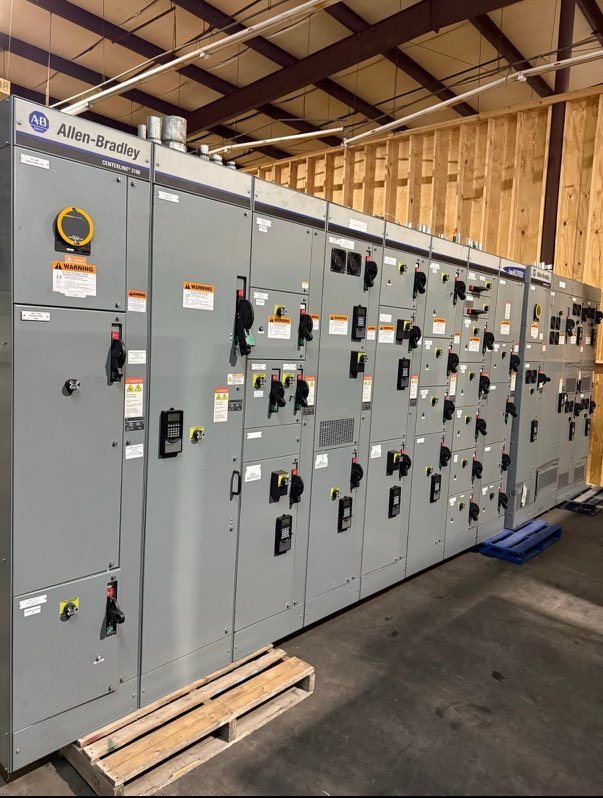
Switchgear brings protective and switching devices together in an assembly used to control electrical distribution. A surplus lineup may include several connected sections, removable or fixed devices, controls and related equipment; the visible outside does not by itself establish what is inside. Identify the whole lineup as well as the individual sections so that a review does not confuse one breaker with the complete assembly. A nameplate photograph can communicate manufacturer, series, voltage and current more reliably than a verbal estimate. Pair it with a wider exterior view so the buyer can see whether the label belongs to a complete lineup or an individual device.
What matters for sellers preparing photographs
For a switchgear lineup, configuration and completeness can be as important as the headline rating. A section that has been separated from its companions is different from an intact lineup, and missing devices or damaged enclosures should be disclosed. A review also depends on whether the equipment can be identified and transferred safely, so an inquiry is not a promise that any particular lineup will be purchased. Photograph only from a safe, authorized position; do not open doors, remove covers or disturb equipment to reach a plate. If information is blocked, send what is safely available and explain the limitation. For an inquiry in Denver metro, identify the property's authorized contact, the equipment's actual location and any known access limits. An owner, facility representative and contractor can have different responsibilities; clarifying those roles makes the inventory and handoff easier to coordinate.
Identify the equipment without extra testing
For sellers preparing photographs, document the actual configuration of switchgear rather than relying on a site-wide description. Photograph the overall front and any safely accessible exterior nameplates, then identify the manufacturer, series, voltage, continuous current and device catalog information if legible. Note the number of sections and whether doors, breakers, controls and other visible pieces are included. Pictures from a safe authorized position are enough for an initial conversation; there is no need to open compartments or operate equipment for the buyer. A helpful description answers three separate questions: what the equipment is, what pieces are included and where the authorized collection would take place. Existing schedules, asset lists and diagrams can supplement photographs, but they may no longer reflect modifications or missing pieces. If the nameplate cannot be read from a safe position, do not reach into the equipment or remove a barrier; describe the gap. A practical inventory can be assembled from existing information and safe exterior views; testing by the seller is not needed.
Plan the handoff in Denver metro
A sale may involve an owner, an electrical contractor, a facility manager and a freight contact. Make clear who controls the equipment, who controls access and whether the material has already been professionally disconnected. Qualified professionals must plan and perform the appropriate electrical and physical work. The buyer covers freight under an agreed purchase, with the handoff details coordinated in advance. Give the buyer enough context to distinguish a complete assembly from a partial lot: equipment type, manufacturer, available ratings, section count and photographs. Indicate which assets are actually available and whether the owner or representative can approve a transaction. Explain whether it is installed or in storage, who is authorized to sell it and any known access constraints. If information is missing, say so; an initial inquiry can still establish whether the buyer needs clarification or can consider a cash offer.
How an offer and freight work
For a sale of switchgear, sellers preparing photographs should identify the included assets and their authority to transfer them. Review is specific to the equipment and is not a promise that every item has a buyer. The buyer considers the actual lot, its visible condition and the information available. On an agreed transaction, payment is upfront and freight is covered. No testing is required from the seller to begin the process. The available information helps distinguish the equipment offered from the rest of the property. Be clear about ownership, quantities, visible condition and any sections or devices excluded from the lot. If the buyer needs clarification, an existing record or safely accessible photo may help. There is no promise that all equipment will be accepted, and no price is represented before a specific review. For the agreed purchase, we handle and cover disconnects, crane services where needed, rigging, loading, freight and hauling. Qualified professionals perform the electrical and rigging work, so the seller does not have to arrange or perform it.
Keep electrical safety with qualified professionals
For sellers preparing photographs considering the sale of switchgear in Denver metro, an offer does not replace site safety procedures. Electrical equipment can contain dangerous energy even when its operating status is uncertain. Take photographs only from an authorized safe position, and use existing records when a label is inaccessible. Do not remove barriers, operate devices or attempt electrical disconnection. All electrical work and any necessary rigging or heavy handling must be performed by qualified professionals; the seller is not required to test equipment. An inquiry is not permission to perform electrical work or bypass the facility's safety procedures. Existing maintenance information can be shared as-is and should not be presented as new test results. If the site has known access or environmental requirements, tell the buyer so qualified personnel can incorporate them into the removal plan. For an agreed purchase, we arrange qualified professionals for disconnects and rigging; the seller does not have to perform those tasks.
What to include in your inquiry
For switchgear, the most helpful description connects the visible equipment to the actual seller's scope. Separate switchgear from unrelated material, and distinguish a complete assembly from individual components or spares. If details are uncertain, note that openly; it is better than guessing about a model, condition or rating. A buyer can then consider the inventory and discuss any agreed next steps without requiring seller testing.